AIware 2026 Keynote Speakers
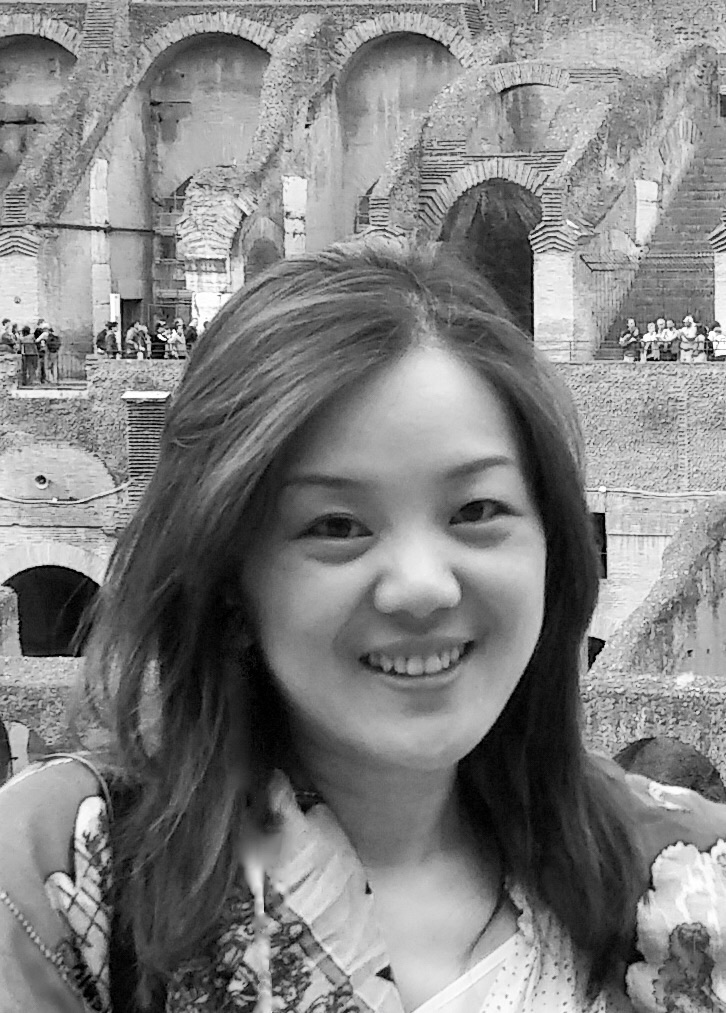
Lin Tan
Purdue University and Amazon
From Features to Data and Domain Knowledge: Reflections on Two Decades of AI for Software
This talk traces how AI-driven software engineering—particularly bug finding—has evolved over two decades: from statistical machine learning and handcrafted features to today’s large language models and agentic pipelines. The central bottleneck has shifted—from features to data, and from implementation to validation and verification. Drawing on work spanning automated code generation, bug and vulnerability detection and repair, binary analysis, and robot task planning, this talk argues that the field is undergoing a broader transition from features to data and domain knowledge. Here, “code” is interpreted broadly: beyond source code to binaries, HTML and CSS, and LaTeX—and beyond functional correctness to maintenance and security. LLMs are powerful across all of these settings, yet they are not a silver bullet: they hallucinate fixes, overfit to test suites, and degrade on real-world tasks. The talk closes by examining what will likely define the decade ahead for software engineering research, including data generation, specification- and test-driven software development, rigorous benchmarks, and neurosymbolic AI.
Bio: Lin Tan is a Professor and University Faculty Scholar in the Department of Computer Science at Purdue University and an Amazon Scholar. Previously, she was a Canada Research Chair and an associate professor at the University of Waterloo. Her research interests include software-AI synergy (AI4Software and Software4AI), LLM4Code, software dependability, autoformalization, and software text analytics. Dr. Tan is an IEEE Fellow and an ELATES Fellow. She is a recipient of ICSE 2026 Most Influential Paper Award, ICSE 2026 retrospective Most Influential SEIP Paper Award, an Early Career Academic Achievement Alumni Award from the University of Illinois, Urbana-Champaign, Canada Research Chair, and multiple industry awards. Dr. Tan's co-authored papers have received Best Paper Award Finalist at ICRA 2025; ACM Distinguished Paper Awards at CCS 2024, ASE 2020, MSR 2018, and FSE 2016; Spotlight at NeurIPS 2025; Oral at AAAI 2023; and IEEE Micro's Top Picks in 2006. She has served as Program Co-Chair of FSE 2024 and LLM4Code, Associate Editor of IEEE Transactions on Software Engineering and Empirical Software Engineering, and ACM SIGSOFT Treasurer and elected Member-at-Large.

Thomas Cottenier
Arm
When Implementation Stops Being the Bottleneck: Design in AI-Native Software Engineering
AI is genuinely lowering the barriers to building software - but democratization is the surface effect. The deeper transformation is structural: AI shifts the primary bottleneck in software development from implementation to system design and reasoning. In agent-driven workflows, the constraint is no longer writing correct code across a large surface area. It is making good architectural decisions, managing system-level tradeoffs, and reasoning coherently across concerns - performance, modularity, data flow, hardware characteristics - that previously required deep specialization or large, coordinated teams. Individual developers and small groups can now operate fluidly across layers that were previously siloed not by technical necessity but by organizational scale. This shift raises fundamental questions for the software engineering research community. How do we evaluate design quality in systems that evolve continuously under agent-driven modification? What does meaningful modularity look like when the cost of cross-boundary reasoning approaches zero? How should practices like refactoring, testing, and performance validation be reconceived when the artifact being maintained is as much a set of agent instructions as a codebase? This talk draws on experience building AI-powered developer tools at AWS and working on AI acceleration across edge and cloud at Arm to ground these questions in observable shifts in how complex systems are actually being built today - and to argue that the SE community's next productive frontier is not productivity measurement, but the theory and practice of design in the age of capable agents.
Bio: Thomas Cottenier is a Senior Principal Engineer at Arm, working on developer platforms and AI services across edge and cloud environments. He previously served as a Principal Engineer at AWS, where he contributed to AI-powered developer tools including CodeWhisperer, Amazon Q, and Kiro. He holds a PhD in Computer Science in programming languages and software engineering and has over 20 years of experience spanning code generation, model-driven engineering, automated refactoring, and large-scale code modernization. His current work focuses on AI-native development, system design, and AI acceleration.
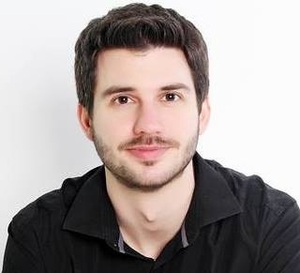
Pascal Kesseli
Microsoft
Formal Methods for Reliable AI Reasoning
In this talk, Pascal Kesseli explores how formal methods can enhance reasoning capabilities in modern AI systems, drawing on his research at the University of Oxford and his work at Meta GenAI and FAIR. He introduces an agentic inference-time reasoning engine, Logic.py, and shows how it supports structured decision-making in agents. He then turns to follow-on work that applies AlphaGo-style reinforcement learning training pipelines to improve reasoning behavior, and he closes by outlining how inference-time and training-time approaches are beginning to converge into a unified direction for building more capable, dependable agents.
Bio: Pascal Kesseli is a researcher and engineer working at the intersection of formal methods and AI. He earned a DPhil from the University of Oxford, focusing on static code analysis and program synthesis using formal reasoning engines. At Meta, he worked across GenAI and FAIR on agentic LLM systems and research infrastructure, including inference-time tool use with formal reasoning engines, contributions to Meta’s Code World Model, and reinforcement-learning environments grounded in static analysis. Most recently he started a position at Microsoft AI, working on RL and coding capabilities.
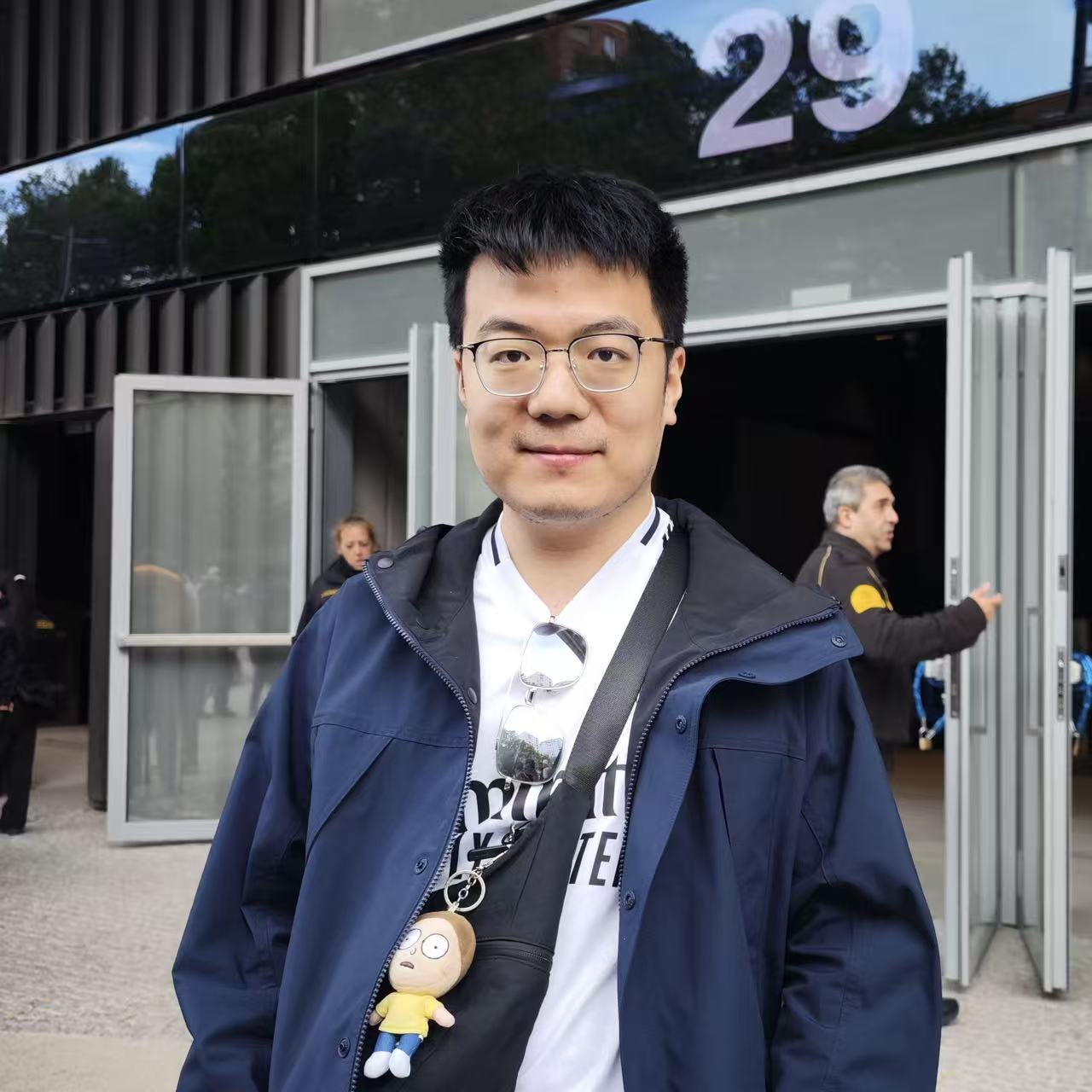
Qidi Xu
MiniMax
From Chatbots to Colleagues: Steering Code-Driven Agents for End-to-End Autonomy
The paradigm of Generative AI is rapidly evolving from passive assistants to autonomous entities. Moving beyond the chatbot and simple code-completion copilots, the next generation of AI agents functions as digital colleagues capable of end-to-end task execution. This talk explores how these agents leverage code not merely as an output, but as their fundamental reasoning engine and interface for interacting with the world. We will focus on the shift from manual prompting to high-level Steering, discussing how human intent can guide code-driven agents to autonomously navigate complex workflows, resolve software engineering challenges, and bridge the gap between abstract requirements and finished, functional results.
Bio: Qidi Xu is a Researcher at MiniMax, specializing in post-training research for Large Language Models (LLMs) focused on software engineering and terminal usage. As a contributor to the coding capabilities of MiniMax M2 series, he is dedicated to evolving AI from simple code generation tools into "digital colleagues" capable of end-to-end autonomous execution. He leads technical iterations in complex code generation, multi-step task execution, and downstream framework adaptability. By leveraging code as a core reasoning engine, he has significantly enhanced the model's engineering performance in real-world development environments, enabling it to autonomously navigate complex workflows and bridge the gap between abstract requirements and functional implementation.

Rajdeep Mukherjee
Amazon
Spec-Driven Development for Autonomous Coding Agents Across the SDLC
In this talk, I will introduce Spec-Driven Development (SDD) in the era of large foundation models and autonomous AI agents, arguing for re-centering the Software Development Life Cycle (SDLC) around specifications to improve alignment, reliability, and long-term maintainability. By placing structured, semi-formal specifications at the core of development, we can ensure higher fidelity between intent, implementation, and system behavior. I will use Kiro (https://kiro.dev/) as a concrete example to demonstrate how development begins with specifications that systematically guide code generation, validation, and evolution. We will explore how SDD supports both greenfield systems, by enforcing clarity and architectural rigor from inception, and brownfield systems, by extracting and leveraging specs from legacy codebases for feature development, bug fix, and modernization. I’ll discuss how coding agents grounded in specs can improve correctness, reduce hallucination, and enforce invariants, while also highlighting open challenges such as spec completeness, ambiguity, trust, and semantic alignment. Finally, we’ll discuss the need for offline benchmarks, high-quality {Code, Spec} datasets, and rigorous evaluation metrics, and conclude with a forward-looking perspective on how specifications may evolve into the primary artifact of software engineering, with code becoming a compiled byproduct of intent.
Bio: Rajdeep Mukherjee is a Tech Lead and Senior Applied Scientist at Amazon, leading developer tools such as Kiro that power developer experiences both inside and outside Amazon. Prior to working on Kiro, Rajdeep developed AI-based coding assistant products such as Amazon Q Developer Customization, as well as code review products such as Amazon CodeGuru. He earned his PhD in Computer Science from University of Oxford, specializing in formal methods and program analysis for system correctness. Prior to joining Amazon, Rajdeep worked in the Electronic Design Automation industry, where he built formal verification tools at Cadence Design Systems that check the correctness of hardware, software, and safety-critical systems. He has also held research roles at Arm Cambridge, Microsoft Research, IBM Research, and Diffblue. His expertise spans coding agents, LLM applications, static analysis, program synthesis, and formal verification systems.
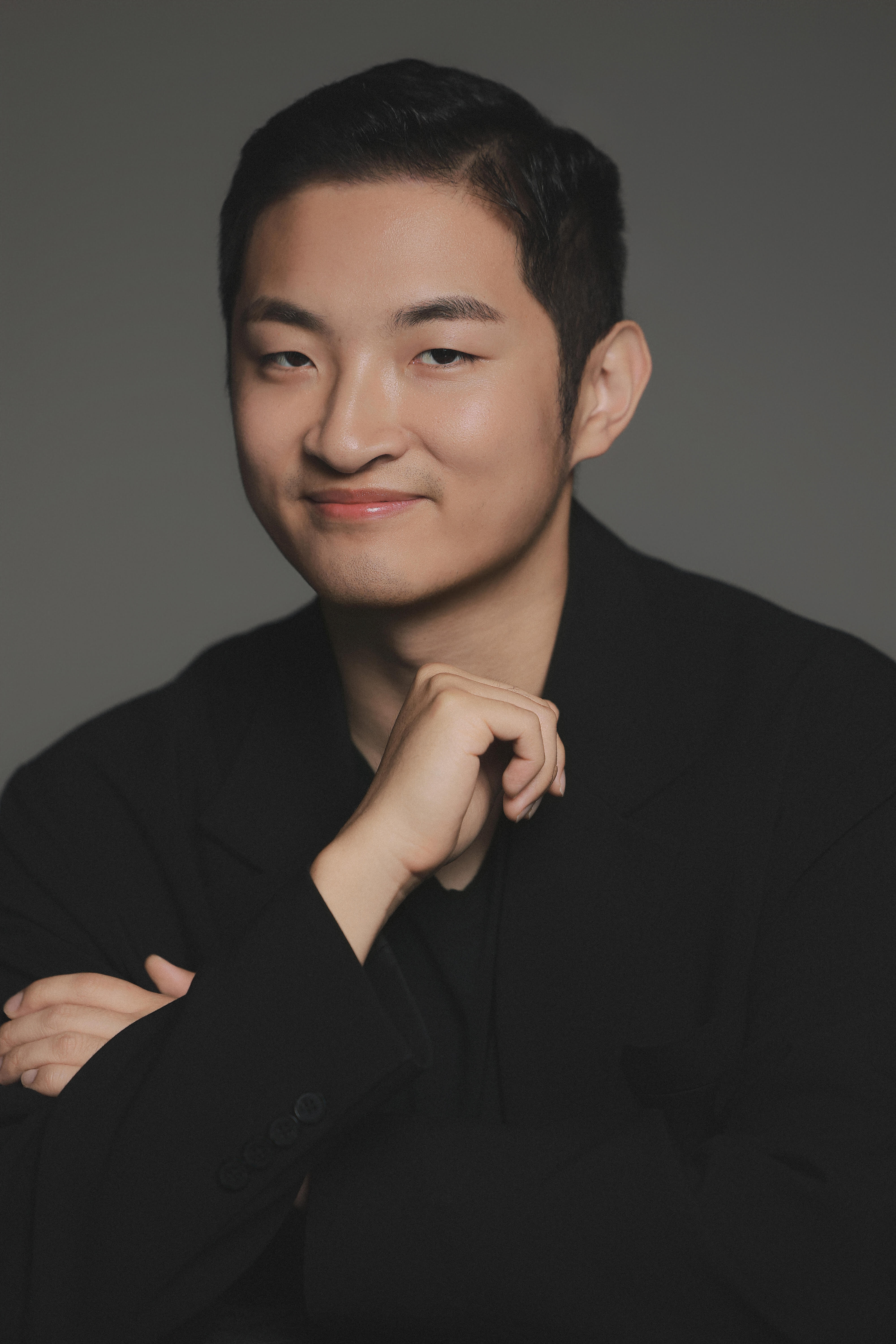
Dickson Tsai
Claude Code
Harness Design for Increasingly Capable Models: How Newer Claude Code Features Shape Agent Trajectories
A coding agent's harness, the software that mediates the agent's interaction with the world, determines how much of a model's capability translates into delivered engineering work. As models have grown more capable, Claude Code's harness has evolved alongside them. This talk is a retrospective on Claude Code's public releases since the start of the year, detailing the design considerations behind each and the aggregate patterns they reveal.
We frame each agent session as a trajectory: a search through the user's environment that accumulates knowledge and enacts changes within it. Through that lens, the year's launches sort into two moves: letting trajectories run further per unit of human attention (auto mode, routines, remote control, worktrees), and managing what each trajectory is conditioned on (memory, multi-agent code review). Meanwhile, increased model capability strengthens the trajectories themselves. We conclude by examining how to orient these trajectories toward desired outcomes. Once step-by-step correctness is no longer the constraint, the binding problems become reconciliation—merging many independently correct trajectories into one repository—and validation—making it cheap for humans to review and revise intent for agents that are competent but not clairvoyant. Both can be software engineering problems, and we offer them to this audience as open questions.
Bio: Dickson Tsai is a Member of Technical Staff at Anthropic, where he has worked on Claude Code since shortly after its launch. He pioneered hooks and built the foundations for skills support—Claude Code's core extensibility primitives. Before Claude Code, he worked on pre-training data research at Anthropic and spent six years as a growth engineer on Google Search. He is currently interested in the right extension points for developer teams to run richer coding agent trajectories.
Dates
Tracks
Sun 5 JulDisplayed time zone: Eastern Time (US & Canada) change
Sun 5 Jul
Displayed time zone: Eastern Time (US & Canada) change
15:30 - 16:00 | Coffee BreakFSE Catering | ||
15:30 30mCoffee break | Break FSE Catering | ||
17:00 - 20:00 | AIware ReceptionBenchmark & Dataset Track / Keynotes / ArXiv Track / Main Track at Concordia - MB-9 EFG Join us for the AIware 2026 Welcome Reception to kick off the conference! Food and drinks will be provided.
| ||
Mon 6 JulDisplayed time zone: Eastern Time (US & Canada) change
Mon 6 Jul
Displayed time zone: Eastern Time (US & Canada) change
08:30 - 08:50 | OpeningMain Track at MB 1.210 Chair(s): Tse-Hsun (Peter) Chen Concordia University, Chao Peng Tencent, Baishakhi Ray Columbia University | ||
10:30 - 11:00 | Coffee BreakFSE Catering | ||
10:30 30mCoffee break | Break FSE Catering | ||
11:00 - 12:30 | |||
11:00 20mKeynote | From Chatbots to Colleagues: Steering Code-Driven Agents for End-to-End Autonomy Keynotes | ||
11:20 20mKeynote | When Implementation Stops Being the Bottleneck: Design in AI-Native Software Engineering Keynotes | ||
11:40 20mKeynote | From Features to Data and Domain Knowledge: Reflections on Two Decades of AI for Software Keynotes | ||
12:00 30mLive Q&A | Joint Q&A Keynotes | ||
12:30 - 14:00 | LunchFSE Catering | ||
12:30 90mLunch | Lunch FSE Catering | ||
15:30 - 16:00 | Coffee BreakFSE Catering | ||
15:30 30mCoffee break | Break FSE Catering | ||
16:00 - 17:00 | |||
17:00 - 17:45 | Brainstorming Panel 1: Model Capability and the Future of Agent HarnessesMain Track at MB 1.210 Chair(s): Hao Li Queen's University We are honored to host the following experts for an in-depth discussion and exchange of ideas:
| ||
18:30 - 22:00 | AIware BanquetBenchmark & Dataset Track / Keynotes / ArXiv Track / Main Track at FUNHUB Montreal Welcome to the AIware 2026 Banquet! Join us for a memorable evening of networking, great food, and entertainment to celebrate the conference. FUNHUB Montreal is approximately a 15-minute walk from the conference venue. Address: FUNHUB Montreal, 733 Rue Cathcart #2, Montréal, QC H3B 1M6 Banquet Event Schedule (Monday, July 6, 2026):
| ||
Tue 7 JulDisplayed time zone: Eastern Time (US & Canada) change
Tue 7 Jul
Displayed time zone: Eastern Time (US & Canada) change
08:30 - 10:30 | |||
08:30 30mDay opening | Welcome FSE Plenary Events | ||
09:00 40mKeynote | Keynote 1: Benoit Baudry - Punking Up Dependency Hell FSE Plenary Events | ||
09:40 - 10:30 | |||
09:40 50mKeynote | Harness Design for Increasingly Capable Models: How Newer Claude Code Features Shape Agent Trajectories Keynotes | ||
10:30 - 11:00 | Coffee BreakFSE Catering | ||
10:30 30mCoffee break | Break FSE Catering | ||
11:00 - 12:00 | AIware Keynotes Session 2Keynotes / Main Track at MB 1.210 Chair(s): Baishakhi Ray Columbia University | ||
11:00 20mKeynote | Formal Methods for Reliable AI Reasoning Keynotes | ||
11:20 20mKeynote | Spec-Driven Development for Autonomous Coding Agents Across the SDLC Keynotes | ||
11:40 20mLive Q&A | Joint Q&A Keynotes | ||
12:00 - 12:30 | Benchmarks, Datasets, and Evaluation of AIware Benchmark & Dataset Track / ArXiv Track / Main Track at MB 1.210 Chair(s): Mohammad Hamdaqa Polytechnique Montreal | ||
12:00 5mTalk | ClassEval-Pro: A Cross-Domain Benchmark for Class-Level Code Generation Benchmark & Dataset Track Yeheng Chen Shanghai Jiao Tong University, Chaoxiang Xie Hohai University, Yuling Shi Shanghai Jiao Tong University, Wenhao Zeng Shanghai Jiao Tong University, Yongpan Wang Shanghai Jiaotong University, CN, Hongyu Zhang Chongqing University, Xiaodong Gu Shanghai Jiao Tong University DOI | ||
12:05 5mTalk | SWE-Bench+: Enhanced LLM Coding Benchmark Benchmark & Dataset Track Haoran Xue York University, CA, Reem Aleithan York University, Canada, Nafid Enan York University, CA, Gias Uddin York University, Canada, Song Wang York University DOI | ||
12:10 5mTalk | Do Agents Dream of Root Shells? Partial-Credit Evaluation of LLM Agents in Capture the Flag Challenges Benchmark & Dataset Track Ali Al-Kaswan Delft University of Technology, Netherlands, Maksim Plotnikov Delft University of Technology, NL, Maxim Hájek Delft University of Technology, NL, Roland Vízner Delft University of Technology, NL, Arie van Deursen TU Delft, Mali Izadi Google & TU Delft DOI | ||
12:15 5mTalk | A Dataset of Agentic AI Coding Tool Configurations Benchmark & Dataset Track Matthias Galster University of Canterbury, Seyedmoein Mohsenimofidi Heidelberg University, Levi Böhme Universität Bayreuth, DE, Jai Lal Lulla Singapore Management University, Muhammad Auwal Abubakar Otto-Friedrich Universität Bamberg, DE, Christoph Treude Singapore Management University, Sebastian Baltes Heidelberg University DOI | ||
12:20 5mTalk | AgenticFlict: A Large-Scale Dataset of Merge Conflicts in AI Coding Agent Pull Requests on GitHub Benchmark & Dataset Track DOI Pre-print | ||
12:25 5mTalk | TestEvo-Bench: An Executable and Live Benchmark for Test and Code Co-Evolution ArXiv Track Jiale Amber Wang University of Waterloo, Kaiyuan Wang Google, Inc., Pengyu Nie University of Waterloo Pre-print | ||
12:30 - 14:00 | LunchFSE Catering | ||
12:30 90mLunch | Lunch FSE Catering | ||
12:30 - 14:00 | |||
12:30 - 14:00 | |||
15:30 - 16:00 | Coffee BreakFSE Catering | ||
16:00 - 16:45 | |||
16:45 - 17:45 | Brainstorming Panel 2: Software Engineering Beyond Code GenerationMain Track at MB 1.210 Chair(s): Weiyi Shang University of Waterloo We are honored to host the following experts for an in-depth discussion and exchange of ideas:
| ||
17:45 - 18:00 | Awards & ClosingMain Track at MB 1.210 Chair(s): Tse-Hsun (Peter) Chen Concordia University, Chao Peng Tencent, Baishakhi Ray Columbia University | ||